
Not long ago, I visited a friend in her city. She generously played tour guide and host, and I was truly touched. During my stay, she shared her religious journey with great passion—how God had saved her. I listened, nodded, and congratulated her on finding a home for her soul. Over time, she tried harder and harder to convert me. I smiled and told her I am spiritual, and that is enough for me. She insisted that accepting God was the only way to be saved, that there is a right and a wrong path to God, and that her religion was the only right path.
Many people, religious or not, confuse spirituality with religion. This confusion has contributed to conflict and division, and often hinders us from pursuing true spirituality. So, what is the difference?
The Background
Our existence has both a physical and a spiritual dimension—a body and a soul. The body is visible, the soul invisible. If the body is computer hardware, the soul is the software. The body is a rental property with an expiration date; the soul is eternal.
Our souls come to earth to grow through experience. Spiritual growth means aligning our lives with spiritual principles—often called Laws of Nature, Universal Truth, or the Tao. When we apply these principles amidst real-world challenges, our growth accelerates.
When we attend churches, mosques, or temples, we are there to learn spiritual principles: how to respect life, love our families and neighbours, and care for those in need; the consequences of jealousy or greed; why we should not steal, kill, or become addicted to alcohol or drugs. Through scripture and teaching, we learn to distinguish right from wrong and develop moral discernment. We can then apply these principles at home and at work.
Our whole life is a spiritual journey. We can travel it the easy way, using spiritual principles as a map. Or we can take the hard way—violating those principles and then tasting the consequences. Stealing, for example, brings prison and a damaged reputation. We eat the bitter fruit of what we sow.
Of course, life is far more complex than simply avoiding theft. Beyond applying spiritual principles in countless situations, we must learn to survive and thrive within social rules, while interacting with people of various intentions and personalities.
Social rules are created by people at varying levels of spiritual maturity, so they can either align with spiritual principles or contradict them. Even when rules are immoral or people toxic, that does not lessen the need to apply spiritual principles—the operating system of the Universe. In a complex world, knowing those principles makes life far easier. This is why deeply advanced souls such as Jesus, Muhammad, and Buddha dedicated their lives to guiding others onto spiritual path, demonstrating a high level of mastery.
Nature of Religions
Does this mean religion equals spirituality? No.
If spirituality is the journey of learning and applying spiritual principles, then religions are vehicles—like buses—that carry us along the way. We can choose among many buses, whichever the one that resonates with us, but the spiritual journey itself is one. No single religion holds a monopoly on truth; what shapes its reputation and impact are the collective actions of its leaders and followers. Since we are all human and still growing, we all make mistakes. No individual’s behaviour can represent an entire religion.
When someone adopts a religion, they are often choosing to travel the journey with a community. Their experience is shaped less by a full understanding of the religion itself and more by their encounters with the people in it.
In an ideal world, priests, mullahs, and high monks would be advanced spiritual teachers. In reality, religious leaders exist at every level of spiritual intelligence: some are advanced, some are beginners themselves, and some are purely driven by selfish or harmful motives.
Some choose religion as a job or a means of survival. In the worst cases, individuals disguise themselves as religious leaders and abuse their power to pursue self-interest and control. They spread false information, twist spiritual truth, and tarnish their religion’s reputation.
In religious communities, as in all of society, leaders and followers come in every shape and size. A leader full of compassion and wisdom has a greater chance of building a community that practises love, unity, and respect. A self-centred or harmful leader can use religion to exercise power and control—or even turn a community into a cult.
While each religion has different approaches—emphasis, dogmas, and rituals—most began with the intention of guiding people onto the right spiritual path. Each has its own merits, and each has provided spiritual anchors, comfort, and a sense of belonging, especially during harsh periods of history. That is why these religions have lasted for centuries and attracted millions of followers.
Path to Spirituality
Is religion necessary? It depends on the individual. Some are born into religious communities; others join as adults. Some want nothing to do with any religion; others make it the centre of their lives. Whatever the choice, it is personal and deserves respect.
What matters most is not a specific religious label, but a commitment to staying on the spiritual growth path. This is measured by the quality of a person’s thoughts and actions. Do they show love, morality, and self-responsibility? Or a tendency to blame, take advantage of or harm others?
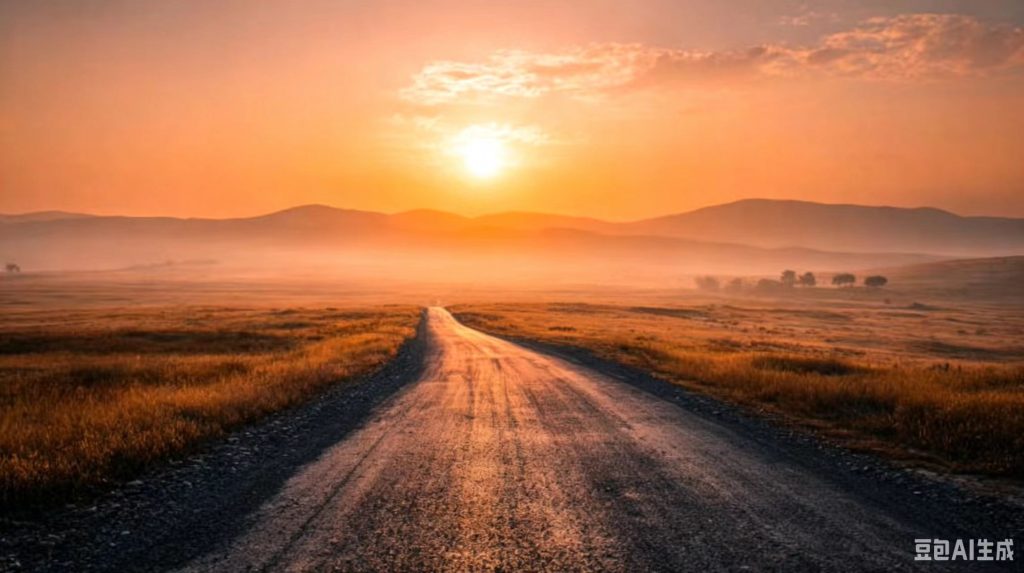
As we’ve seen, religion is just one way to travel. If the spiritual journey is the road, we can take a bus and enjoy the companionship of fellow travellers. Or we can go by car, bicycle, or on foot—alone, or with companions of our choice.
We can learn spiritual principles by reading religious scriptures or philosophical works such as Rumi’s poetry or Lao Tzu’s Tao Te Ching. We can enjoy books by spiritually wise writers—Peace Is Every Step, The Forty Rules of Love, Siddhartha, The Power of Now, The Alchemist, and The Little Prince. We can also follow the teachings of both religious and secular spiritual teachers.
What matters most is that we learn sound spiritual principles, apply them in life and work, and find a supportive tribe along the way. How do we recognise the right path? Religious or not, every true spiritual path points in the same direction: love, unity, wisdom, and compassion.
True spiritual principles remind us of our spiritual nature: we are creators of our own reality. We do not need to be fixed or punished. There is no need to live with fear, shame, or guilt. We were born whole, creative, and resourceful—fully capable of creating the life we desire. We only need to recognise who we are and unleash that potential. We have the capacity to love and to create miracles. United and focused on a shared purpose that benefits ourselves, all humanity, and the planet, we are powerful beyond measure.
In contrast, fear-based teaching insists that power lies outside us, that we are broken, and that we must wait for a saviour. It may elevate one religion over another, or claim that some people are inherently better. It magnifies differences instead of commonality, shows no tolerance, and can use those differences to fuel conflict or justify control and extremism in religion’s name.
Thinking back to my friend, her passion came from a sincere place, yet it was framed in fear and exclusivity. True spirituality, whether expressed through a religion or not, never needs to threaten or divide. It invites us to walk our own path—a journey of deepening relationship with ourselves, with others, and with the Universe. It asks only for practice, not perfection, and it grows best in soil free of shame. That path is open to all of us, right now.